Wikimedia Commons · CC
Savanne · sacred crater lake
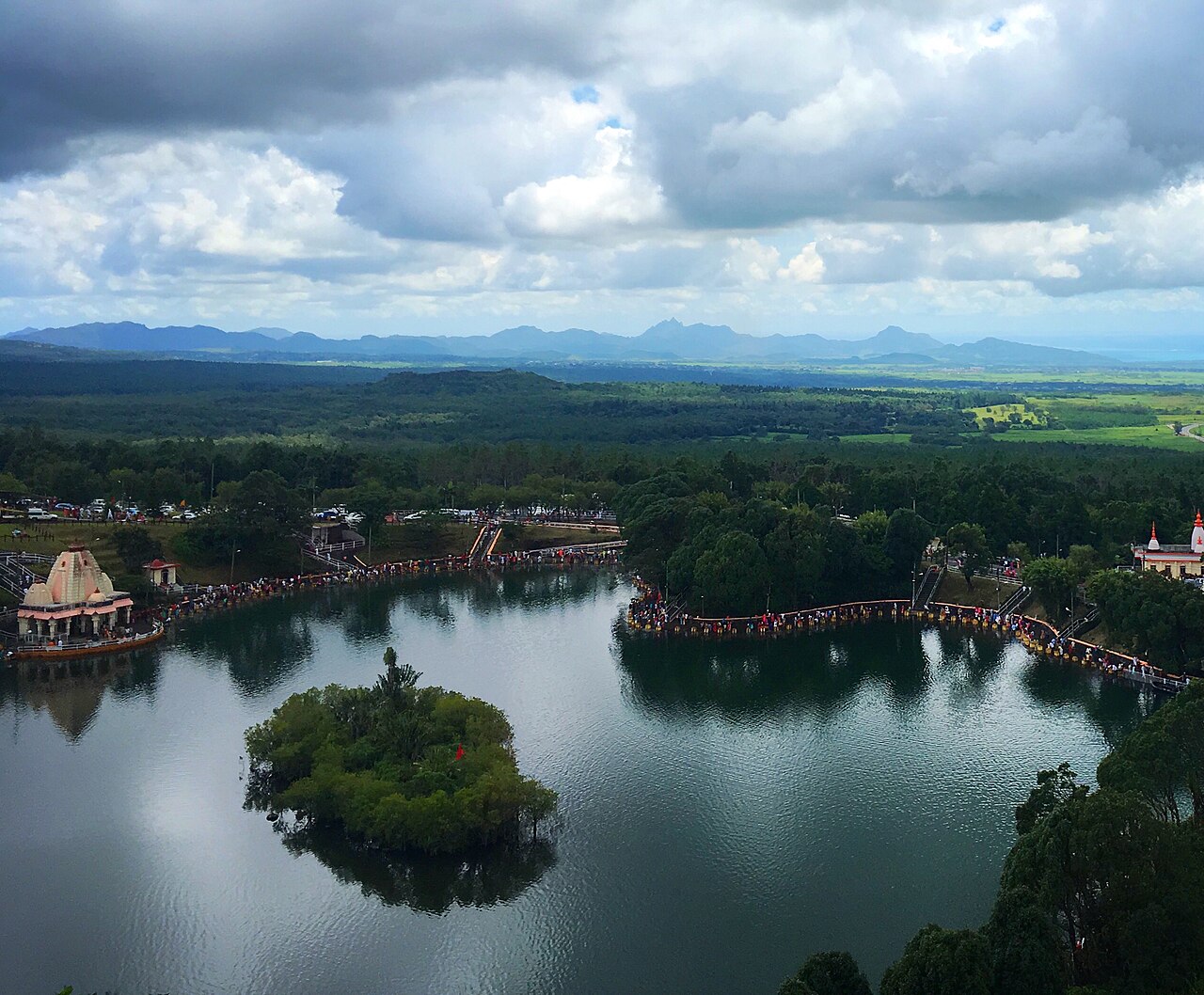
Ganga Talao (Grand Bassin)
Ganga Talao is a crater lake in the south of the island, among the most important Hindu sites outside India. The first recorded pilgrimage group came from Triolet, led by Pandit Giri Gossayne, in 1898. In 1972 water from the Ganges was mixed into the lake, a symbolic link, and the name Ganga Talao became official. In 1998 it was declared a sacred lake. During Maha Shivaratri, hundreds of thousands of Mauritians walk, many carrying kanwar shrines. Mangal Mahadev, a 33-metre Shiva statue, was inaugurated at the entrance in 2007. Dress modestly. This is an active sacred landscape year-round.
History
Why this place exists
Grand Bassin / Ganga Talao is a crater lake and a major Hindu pilgrimage site, especially around Maha Shivaratri. The Ganga connection is faith and ritual, not a shipping invoice from the Ganges. Treat it as a temple, not a lookout with statues.
First visit
To do
- Shoulders and knees covered. Shoes off where marked.
- Not a photo set on pilgrimage days.
- Pair with the south/southwest, not a north-coast checkout.
- Silence at the water. The walk around the rim if it is open and respectful to do so.
- The lake surface in still weather, temples around the rim, and the approach statue as a landmark — not as a climbing frame. Footwear rules at shrines.
Tickets
Cheaper here
No ticket. Do not pay for a 'temple pass' in a car park.
Sacred crater lake. Free to enter. Dress and conduct are the price.
Location
On the island
OpenStreetMap, live. Pins are the place, not a sponsored hotel.
-20.4181° S · 57.4928° E
The story
Indentured labourers and their descendants created a sacred geography in the Mauritian highlands when a return to the Ganges was impossible. Mixing Ganges water in 1972 made the link explicit. The annual Maha Shivaratri walk is one of the largest religious gatherings in the country. Outside festival weeks the lake is quieter, still active, often misty.
What to look for
The lake surface in still weather, temples around the rim, and the approach statue as a landmark — not as a climbing frame. Footwear rules at shrines.
Best time to visit
Non-festival weekday mornings for a quiet visit. Maha Shivaratri only if you understand you are joining a pilgrimage, not a show. Mountain weather turns quickly; mist is common.
How to get there
Highland roads from the south, centre, or via Bois Chéri. Not on the beach belt. Allow mountain time, not coastal time.
Cost
The sacred site is not a ticketed theme park. Donations may be offered. Parking and nearby vendors are separate. Verify; do not pay anyone who claims an official 'entry ticket' without a marked counter.
Time needed
45–90 minutes. Longer during pilgrimage, which can take a whole day on foot.
Do not miss
Silence at the water. The walk around the rim if it is open and respectful to do so.
Source / references
Standard public histories of the 1898 pilgrimage, 1972 Ganges water, 1998 sacred-lake declaration, 2007 statue.
That this is not a 'viewpoint with statues'. Photography of worship, especially during pilgrimage, can be intrusive. Also missed: festival traffic — do not plan a Chamarel combo th…
Crowd: moderate